August 17, 2026
When you’re exploring custom software development, you’ll likely hear developers mention technologies and frameworks you’ve never encountered before. One of the frameworks you’ll frequently encounter when researching modern web applications is Laravel.
If you’re not a developer, that can raise more questions than answers.
What exactly is Laravel? Why do developers recommend it? And perhaps most importantly, how does the technology behind your software affect your business?
The good news is that you don’t need to understand the technical details to make informed decisions. This guide explains what Laravel is, what it can be used to build, and why many organizations choose it as the foundation for custom software.
Key Takeaways
- Laravel is a modern, open-source PHP software development framework used to build custom web applications and business software.
- Businesses commonly use Laravel for customer portals, workflow automation, internal business systems, reporting dashboards, and SaaS platforms.
- Laravel provides a structured application architecture and reusable capabilities that help development teams build, maintain, and extend software efficiently.
- Laravel can integrate with existing business systems, databases, APIs, and third-party applications, enabling organizations to connect data and streamline processes.
- For organizations with complex workflows or requirements that off-the-shelf software cannot adequately support, Laravel can provide a flexible foundation.
What Is Laravel?
Laravel is a free, open-source web application framework built on PHP, a programming language widely used for websites and web applications. Developer Taylor Otwell created Laravel in 2011, and it has since become one of the most broadly adopted PHP frameworks for building custom web applications.
Just as architects don’t build every structure from raw materials alone, developers don’t typically build applications entirely from scratch. Instead, they use established frameworks like Laravel that provide pre-built, tested building blocks for common functionality like user logins and database connections, so developers aren’t reinventing them for every project.
Another way to think about Laravel is this: Laravel is to custom software what WordPress is to websites: a foundation developers build on rather than a finished product in itself.
That structure is what makes it so valuable to development teams. It gives them a consistent foundation for creating software while allowing complete flexibility in how the final application works, functions, and integrates with existing systems.
From a business perspective, it’s the outcome that matters most. Because Laravel already handles many of the repetitive, foundational elements of development, developers can spend more time on the features that are unique to each project. The result is faster development without sacrificing the ability to tailor the software to each client’s exact requirements.
What Types of Applications Can Be Built With Laravel?
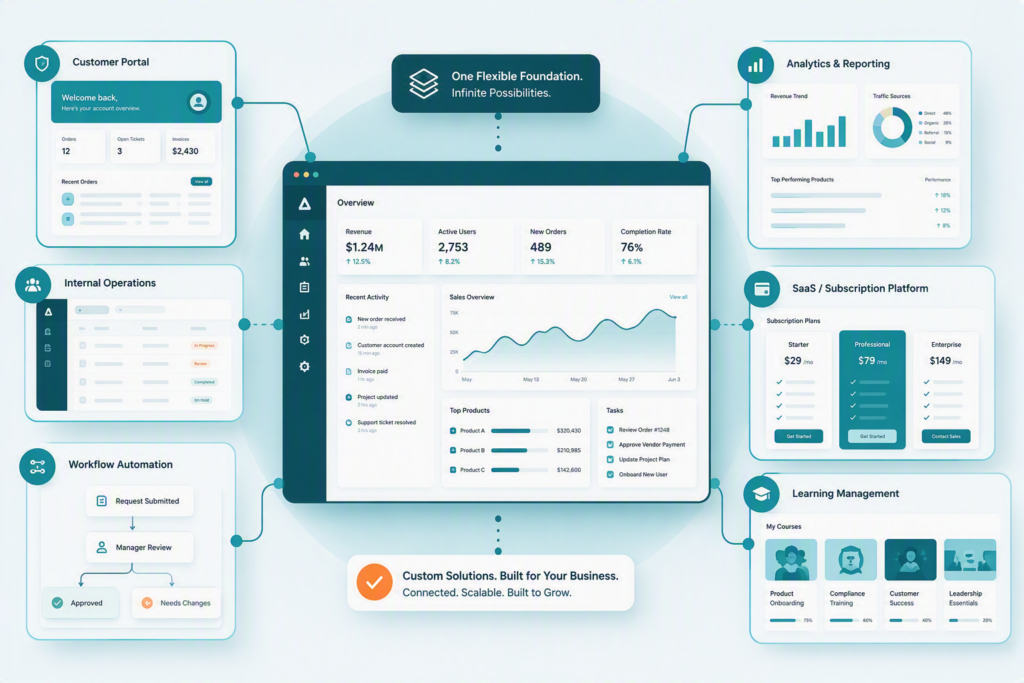
One of Laravel’s strengths is its flexibility, allowing developers to build a broad range of use cases.
Customer Portals
Many organizations use Laravel to create secure portals where customers can access information, submit requests, manage accounts, or interact with services online.
Internal Business Applications
Companies often outgrow spreadsheets, disconnected tools, and manual processes. Laravel can be used to build operational systems designed around how your team actually works.
Workflow Automation Systems
Many repetitive business processes can be streamlined through custom automation. Laravel applications can automate approvals, notifications, data collection, reporting, and other routine activities.
Reporting Dashboards
Organizations frequently need visibility into information spread across multiple systems. Laravel can support custom dashboards that consolidate data into a single view.
SaaS Platforms
For businesses building software products, Laravel is commonly used as the foundation for subscription-based platforms, industry-specific tools, and customer-facing applications.
Learning Management Systems
Organizations that provide training, certifications, employee education, or customer onboarding often use Laravel-powered systems to manage learning experiences.
Why Businesses Choose Laravel
Business leaders rarely care about frameworks for their own sake. What matters is whether the technology helps achieve business objectives. Laravel strikes a balance between development efficiency, long-term flexibility, and scalability, making it a popular choice for custom business software.
Faster Development
Laravel includes many built-in features that developers would otherwise need to build from scratch, such as user authentication, database management, and routing. By providing these foundational capabilities, development teams can spend more time building the features that make your business unique, helping projects move from planning to production more efficiently.
Easier to Maintain
Business needs rarely stay the same. New services are introduced, workflows evolve, regulations change, and customer expectations grow. Laravel’s structured architecture makes applications easier to update, maintain, and expand over time. Whether you need to add new functionality, integrate another system, or support additional users, the framework is designed to accommodate change without requiring a complete rebuild.
Built to Grow
As organizations grow, their software must grow with them. Laravel provides a strong foundation for applications that need to support increasing users, larger datasets, additional integrations, and more complex workflows. It also includes security-focused features and integration capabilities that help development teams build reliable applications capable of supporting long-term business growth.
Custom Laravel Application vs. Off-the-Shelf Software
Custom software is not always the right answer.
Many organizations can successfully run their operations using commercial software products that are already available on the market.
However, challenges often emerge when business processes don’t align well with the limitations of those platforms.
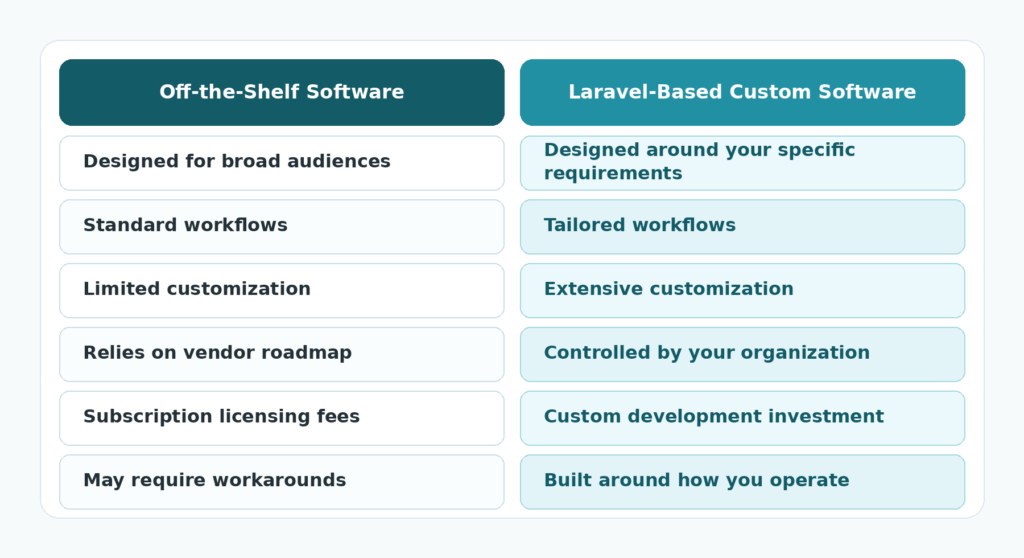
The decision is rarely about whether one approach is universally better. It’s about determining which approach best supports your goals, processes, and growth plans.
When Is Laravel a Good Fit?
Laravel is often worth considering when:
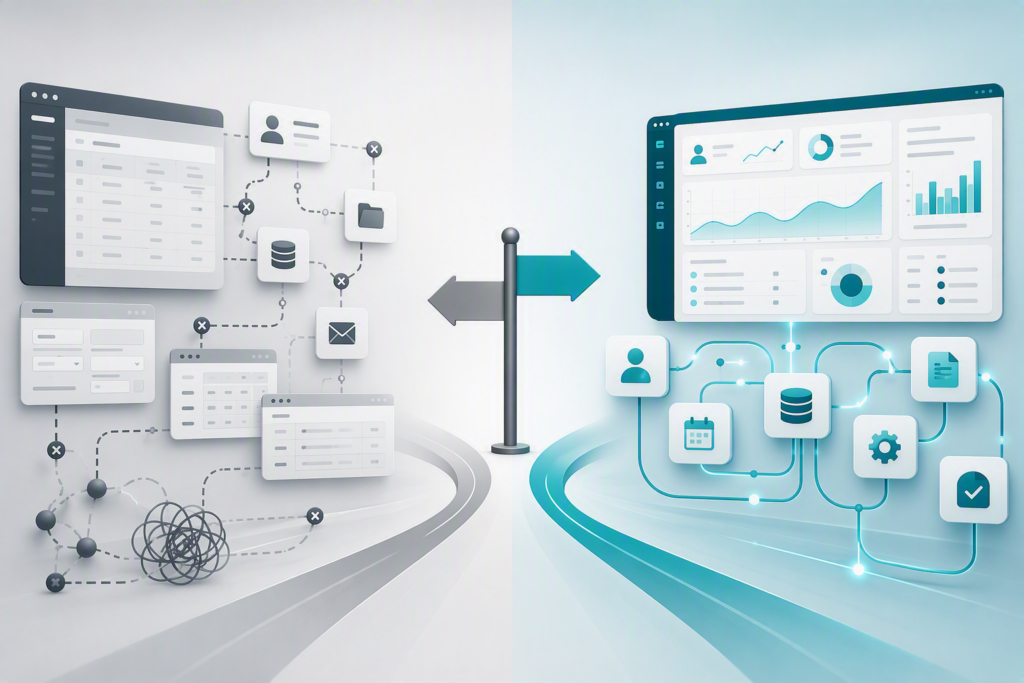
- Teams rely heavily on spreadsheets and manual processes
- Multiple software systems don’t communicate effectively
- Existing tools require constant workarounds
- You need a customer, vendor, or member portal
- Significant workflow automation opportunities exist
- You’re building a new software product or digital platform
- Existing applications can no longer support business growth
In these situations, a custom application may provide long-term value that surpasses the limitations of packaged software.
When Laravel Might Not Be the Best Choice
Laravel is a powerful framework, but it is not the answer to every business challenge.
For example, custom software may not make sense when:
- A proven off-the-shelf solution already addresses your needs
- You only need a basic marketing website
- Your requirements are relatively standard and unlikely to change
- The cost of customization outweighs the expected business value
The goal is not to build custom software whenever possible. It’s to choose the right solution for the problem you’re trying to solve.
Why AVIBE Builds With Laravel
After reading this guide, you may have noticed something: most of the benefits we’ve discussed aren’t really about Laravel itself. They’re about what Laravel enables businesses to accomplish.
A customer portal that gives clients self-service access to information. An internal application that eliminates spreadsheet-driven processes. A workflow system that reduces manual work. A software platform that can grow alongside the organization that depends on it.
Laravel is simply one of the tools we use to build those outcomes.
At AVIBE, we’ve found Laravel to be a strong fit for many custom software projects because it gives us the flexibility to create applications around the way our clients actually operate, not the way a pre-packaged product expects them to operate. That means we’re able to focus less on working around software limitations and more on building functionality that supports real business goals.
Of course, it isn’t the right answer for every project. Technology decisions should be driven by business requirements, not preferences for a particular framework.
But when an organization needs custom workflows, system integrations, automation, customer-facing tools, or a platform designed around unique business processes, Laravel is often one of the frameworks we evaluate because it supports the things that matter most: flexibility, maintainability, and long-term value. Schedule a free introductory call to discuss your goals, requirements, and whether Laravel is the right fit.
Frequently Asked Questions
What is Laravel?
Laravel is an open-source development framework used to build custom web applications. Developers use Laravel as a foundation for creating software such as customer portals, internal business systems, workflow automation tools, reporting platforms, and SaaS products.
What types of applications can be built with Laravel?
Laravel can support a wide range of applications, including customer portals, internal operational systems, reporting dashboards, workflow automation platforms, learning management systems, and subscription-based software products. Its flexibility allows businesses to create solutions tailored to their specific requirements.
Is Laravel a good choice for business applications?
For many organizations, yes. Laravel offers a balance of flexibility, scalability, security, and long-term maintainability. It is particularly valuable when businesses require functionality that cannot be achieved effectively through off-the-shelf software.
How do I know if I need custom software instead of off-the-shelf software?
Custom software becomes worth considering when your team relies on manual processes, disconnected systems, repetitive workarounds, or specialized workflows that commercial software cannot adequately support. The decision should ultimately be based on business value rather than technology preferences.
Can Laravel integrate with our existing systems?
Yes. Laravel is frequently used to connect with databases, business platforms, third-party services, APIs, and other software systems. Many organizations use Laravel applications to bring together data and processes that currently exist in separate tools.
Is Laravel secure?
Security depends on both the framework and the development practices used to build the application. Laravel includes security-focused features that help developers address many common web application risks, making it a strong foundation for business-critical software when implemented correctly.
Helpful Web Tips & Tricks
Start Your Project