August 26, 2026
One of the most common questions we hear from prospective clients is:
“How much does custom software cost?”
The honest answer is still: it depends. But for 2026 budgeting, that answer needs more context.
For professional U.S.-based development teams, many serious custom software projects fall between $75,000 and $750,000, with large enterprise platforms, complex integrations, compliance-heavy systems, and AI-enabled products often exceeding $1,000,000.
The cost depends less on the idea itself and more on the hours, expertise, risk, integrations, security requirements, and long-term business value involved.
This guide breaks down what drives custom software pricing, what different project sizes tend to look like, and how to build a realistic budget before you commit to development.
Key Takeaways
- Most custom software projects in 2026 cost between $75,000 and $750,000, though large enterprise systems may exceed $1 million.
- The biggest drivers of cost are feature complexity, integrations, security requirements, scalability, and AI functionality.
- A lower hourly rate does not always result in a lower total project cost if rework, communication challenges, or quality issues increase development effort.
- Discovery helps define scope, reduce risk, and build more accurate budgets before development begins.
- Businesses should plan for ongoing maintenance, support, hosting, and security updates after launch.
- Custom software often becomes more valuable over time as it reduces manual work, improves efficiency, and supports unique business processes.
- Businesses usually pursue custom software when off-the-shelf tools can no longer support their workflows, integrations, reporting, or growth objectives.
Typical Custom Software Cost Ranges for 2026
While every project is different, most custom software development work falls into a few practical budget ranges.
| Project Type | Typical 2026 Cost | Timeline | Common Scope |
|---|---|---|---|
| Focused internal tool | $75k to $125k | 1 to 3 months | Simple workflow, limited users, light reporting |
| Small business application | $125k to $250k | 3 to 6 months | Customer portal, operations app, CRM-style tool, basic integrations |
| Mid-scale business system | $250k to $750k | 6 to 12 months | Multiple roles, dashboards, several integrations, heavier QA |
| Large enterprise or SaaS platform | $750k to $1.5M+ | 12 to 24+ months | Multi-tenant architecture, billing, permissions, compliance, scale |
| AI, data, or compliance-heavy platform | Often adds 15% to 40%+ | Varies | AI workflows, data pipelines, audit controls, privacy, security review |
These are planning benchmarks, not fixed bids. A $150,000 project can become a $300,000 project if the scope expands from a simple workflow into dashboards, complex permissions, integrations, data migration, and compliance requirements.
$75,000 to $125,000: Focused Internal Tools
Projects in this range are usually focused, single-purpose tools designed to improve internal efficiency. They often replace spreadsheets, email-based processes, or manual tracking.
- Internal request and approval tools
- Inventory tracking systems
- Job quoting tools
- Basic time tracking applications
- Simple reporting dashboards
$125,000 to $250,000: Small Business Applications
At this level, the software usually becomes more central to day-to-day business operations. These projects often include user accounts, administrative screens, reporting, and at least one integration with another system.
- Custom CRM or customer management systems
- Customer portals
- Operations management systems
- Learning management systems
- Accounting, payment, or e-signature integrations
$250,000 to $750,000: Mid-Scale Business Systems
These systems typically support multiple departments, user roles, dashboards, business rules, and integrations across the company. The work becomes less about building screens and more about coordinating data, workflow, security, and adoption.
- Scheduling, dispatch, or field service platforms
- Advanced reporting and KPI dashboards
- Multi-location or multi-company systems
- Data migration from legacy systems
- Role-based permissions and approval workflows
$750,000 to $1,500,000+: Large Enterprise or SaaS Platforms
Large platforms usually require deeper architecture, scalability planning, compliance controls, DevOps, QA automation, and long-term maintainability. These projects often involve several releases rather than one big launch.
- Multi-tenant SaaS platforms with subscriptions and billing
- Enterprise portals with customer self-service
- Operations platforms with real-time reporting
- Systems with multiple external integrations
- Applications with high security, compliance, or uptime requirements

Why Custom Software Costs What It Does
Custom software pricing is primarily driven by the time and expertise required to deliver something reliable, secure, scalable, and tailored to your business.
In 2026, professional development rates commonly fall into these broad ranges:
- $150 to $275 per hour for experienced U.S.-based professional development teams
- $60 to $125 per hour for nearshore teams, depending on region and seniority
- $30 to $90 per hour for offshore teams, depending on role, quality, and engagement model
- $175 to $350+ per hour for specialized architecture, AI, cloud, security, or compliance expertise
Lower hourly rates do not always mean a lower total cost. Communication overhead, rework, unclear requirements, weak QA, and poor architecture can erase the savings from a cheaper rate. The real number that matters is total cost to reach a reliable business outcome.
A typical professional project team includes:
- Project manager or product lead
- Software developers
- UI/UX designer
- QA tester or QA engineer
- DevOps, cloud, or IT engineer
- Solution architect or technical lead for larger systems
What separates a professional firm from a solo developer is not just capacity. It is the combined strength of diverse expertise, proven process, accountability, risk management, documentation, testing, and long-term support.
The 6 Biggest Factors That Affect Cost in 2026
1. Features and Feature Complexity
More features mean more development hours, but feature complexity often has an even bigger impact than feature count.
For example, a straightforward lead management system with simple reporting might take about 400 hours to build. Add dashboards, report builders, multi-company support, advanced automation, lead scoring, and integrations, and the same system can quickly become a 1,500 to 2,500-hour project.
2. Integrations
Integrations connect your software to the tools your business already relies on. They create major efficiency gains, but they also add planning, testing, error handling, authentication, and support requirements.
- Payment processors
- CRMs
- Accounting systems
- ERP platforms
- Single sign-on (SSO)
- E-signature tools
- Marketing automation platforms
- AI, analytics, or data warehouse tools
Depending on API quality, documentation, data complexity, security, and reliability requirements, each meaningful integration can add 40 to 250 hours to a project.
3. Security and Compliance
Security and compliance requirements often require additional engineering, documentation, review, and testing. In 2026, this matters more because more systems handle customer data, payment data, employee data, proprietary business data, or AI-assisted workflows.
- HIPAA
- SOC 2
- PCI
- FedRAMP or public-sector security requirements
- Accessibility requirements such as WCAG
- Audit logging and data retention controls
Compliance work can increase total project cost by 10% to 30%, and sometimes more for regulated, mission-critical, or public-sector systems.
4. User Experience and Design
Good user experience plays a major role in whether software is adopted. A basic interface might require 40 to 100 hours of design, while a polished enterprise interface with user research, prototypes, usability review, and design system work can take 150 to 350+ hours.
5. Scalability and Performance
Software designed for 10 users is very different from software designed for 10,000 users. The same applies to 5,000 records versus 5 million records.
- Performance engineering
- Database optimization
- Caching
- Load balancing
- Cloud infrastructure
- Monitoring and alerting
- Backup and disaster recovery planning
As usage, data volume, and uptime expectations increase, additional engineering is required to keep the system fast and reliable. This often adds 20% to 30% more development time.
6. AI Readiness and Automation
AI can make some development tasks faster, especially when requirements are clear and the work is well understood. But AI does not eliminate the need for discovery, architecture, quality assurance, security review, data modeling, integration planning, or business judgment.
AI-enabled features can also add cost. If your application uses AI for recommendations, document analysis, chat, workflow automation, data extraction, or reporting, the project may require additional work around prompt design, data privacy, accuracy testing, monitoring, model selection, and user safeguards.
Why Most Projects Should Start With Discovery
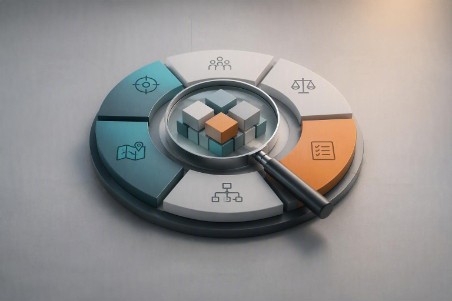
Before development begins, many projects include a discovery phase to define the business goals, technical requirements, scope, risks, and budget range.
Typical discovery activities include:
- Stakeholder interviews
- Workflow mapping
- Feature prioritization
- Technical feasibility review
- Integration review
- Data migration planning
- Early wireframes or prototypes
- Budget and roadmap planning
For 2026 planning, discovery often costs $7,500 to $35,000, depending on complexity. For larger or more technical projects, it can be higher. Done well, discovery usually saves far more than it costs by reducing rework, clarifying decisions, and preventing expensive surprises during development.
What About Ongoing Costs After Launch?
The initial build is only part of the investment. Software needs maintenance, monitoring, updates, hosting, security patches, user support, and future improvements.
A practical planning rule is to budget 15% to 25% of the original build cost per year for ongoing maintenance, support, hosting, and improvements. A $300,000 application may require $45,000 to $75,000 per year to keep it secure, supported, and evolving.
That does not mean every company spends that amount every year, but it is a realistic planning benchmark for business-critical systems.
Why Custom Software Is Often More Cost-Effective Than It Appears
Off-the-shelf software usually looks cheaper at first glance. A subscription of $50 to $100 per user per month feels manageable compared to building a custom solution from scratch.
But over time, the hidden costs of generic software can become significant.
- Licensing fees that increase as your team grows
- Manual processes employees must work around
- Inefficient workflows forced by rigid systems
- Disconnected tools that require duplicate data entry
- Data silos that limit reporting and visibility
- Consulting, implementation, and premium support fees
Example: Subscription Costs Add Up Quickly
Consider a company with 120 employees using a SaaS platform that costs $80 per user per month.
- Monthly cost: $9,600
- Annual cost: $115,200
- Five-year subscription cost: $576,000
That total does not include additional integration tools, premium feature upgrades, consulting, support fees, or lost productivity from inefficient workflows.
In many cases, investing $250,000 to $500,000 into a custom platform can replace multiple subscription tools, reduce manual work, and give the business a system designed around how it actually operates.
The Real Value Is Not Just Cost
The biggest advantage of custom software is not simply saving money. It is the ability to operate your business exactly the way you want.
- Automate manual work: reducing repetitive tasks can save hundreds of employee hours per month
- Integrate your tech stack: CRM, accounting, ERP, websites, portals, and internal tools can work together
- Improve decision-making: centralized data and custom dashboards give leaders real-time insight
- Scale without licensing penalties: adding users does not automatically multiply subscription costs
- Create a competitive advantage: your unique processes become proprietary business systems
Custom Software Becomes a Business Asset
Unlike subscription software, custom software becomes an asset your company owns. That means:
- No licensing lock-in
- No forced pricing increases
- No dependency on a vendor roadmap
- No artificial feature limitations
- More flexibility to evolve as the business changes
For companies with unique processes, complex operations, or growth ambitions, this flexibility often becomes more valuable than the initial investment.

When Custom Software Makes Sense
Custom software is typically the right choice when:
- You have unique workflows
- Existing software forces inefficient processes
- You need deep integrations across systems
- You want better reporting and business visibility
- You need to support a competitive or proprietary process
- Long-term licensing costs exceed the cost of building and maintaining your own system
- Security, compliance, or scale requirements make generic tools a poor fit
For many companies, custom software becomes a strategic asset rather than a line-item expense.
Final Thoughts
Custom software pricing varies widely, but the underlying economics are straightforward:
Cost = Hours x Blended Rate
In 2026, most serious business applications fall between $75,000 and $750,000, while larger enterprise platforms may exceed $1,000,000.
But the real question is not just cost. It is what that investment enables your business to do.
Well-designed software can:
- Reduce labor costs
- Eliminate inefficiencies
- Improve business visibility
- Enable new revenue streams
- Support scale without multiplying license costs
- Turn your process into a long-term business asset
For many organizations, the long-term return on investment far outweighs the initial cost. When built well, software tailored to your business is not just an expense. It becomes a lasting, strategic business asset.
If you are considering custom software, AVIBE can help you understand the likely scope, cost, risks, and path forward before you commit to a build. As a U.S.-based development partner, we work with organizations whose complex operations have outgrown spreadsheets and off-the-shelf tools. AVIBE designs around your business’s unique needs, helping your team reduce manual work, improve efficiency, and gain the tools they need to scale.
Our approach is collaborative and practical, focused on making technology simpler to navigate and more effective in everyday workflows. Connect with our team to get clarity on what it would take to build your project the right way.
Frequently Asked Questions
How much does custom software cost in 2026?
Many serious custom software projects built by professional U.S.-based development teams cost between $75,000 and $750,000. Large enterprise platforms, compliance-heavy systems, complex integrations, and AI-enabled applications may cost more than $1 million.
What is the average cost of a custom software application?
There is no single average that applies across the board because the scope of a custom application can vary so broadly. A focused internal tool may cost between $75,000 and $125,000, a small business application may cost between $125,000 and $250,000, and a mid-scale business system may range from $250,000 to $750,000.
What factors have the biggest effect on custom software development cost?
The primary cost factors are feature complexity, integrations, security and compliance requirements, user experience and design, scalability, performance, and AI-enabled functionality. Each factor can add development, planning, testing, documentation, or long-term support requirements.
Why can two similar software projects have very different costs?
Applications that appear similar at a high level may differ substantially in their workflows, dashboards, permissions, integrations, data migration needs, compliance requirements, and automation. Those underlying details affect the number of hours, types of expertise, and amount of testing required.
Do security or compliance considerations increase custom software costs?
Yes. Security and compliance requirements can require additional engineering, documentation, review, and testing. Compliance-related work may increase the overall project cost by 10% to 30%, and potentially more for regulated or public sector systems.
How much does custom software discovery cost?
A discovery phase commonly costs between $7,500 and $35,000, although larger or more technical projects may cost more. Discovery can include stakeholder interviews, workflow mapping, feature prioritization, technical and integration reviews, data migration planning, prototypes, and roadmap development.
Is custom software more expensive than off-the-shelf software?
Custom software usually requires a larger upfront investment, while off-the-shelf software may appear less expensive because its cost is distributed through subscription fees. A complete comparison should also consider licensing growth, implementation fees, integrations, support, manual workarounds, duplicate data entry, and the cost of disconnected systems.
When does custom software make financial sense?
Custom software may make sense when an organization has unique workflows, requires deep integrations, needs stronger reporting, supports a proprietary process, or has security, compliance, or scalability requirements that generic products don’t address fully. It may also be worth considering when long-term licensing and operational costs begin to exceed the cost of building and maintaining a purpose-built system.
Helpful Web Tips & Tricks
Start Your Project